



MENUMENU
TALK TO AN EXPERT
Special Hours: 7AM – 6PM PST


Lithium batteries are now widely used in RVs, boats, and off-grid power systems. And when you choose the right chemistry and a battery designed for deep-cycle service, they are considered a safe and reliable option.
The important nuance is that not all lithium batteries are built the same. Cell chemistry, mechanical construction, protection electronics, and third-party validation all influence safety.
Below, we explain what makes lithium batteries safe, why LiFePO4 is typically the safest choice for mobile applications, and the layered safeguards manufacturers like Battle Born build in to help prevent abnormal operation.
Before diving into what a lithium battery is, let’s cover the basics of how a battery works. Batteries have a positive side (cathode) and a negative side (anode). When you connect an electronic device to a battery, electrons flow from the anode to the cathode through your device and power it.
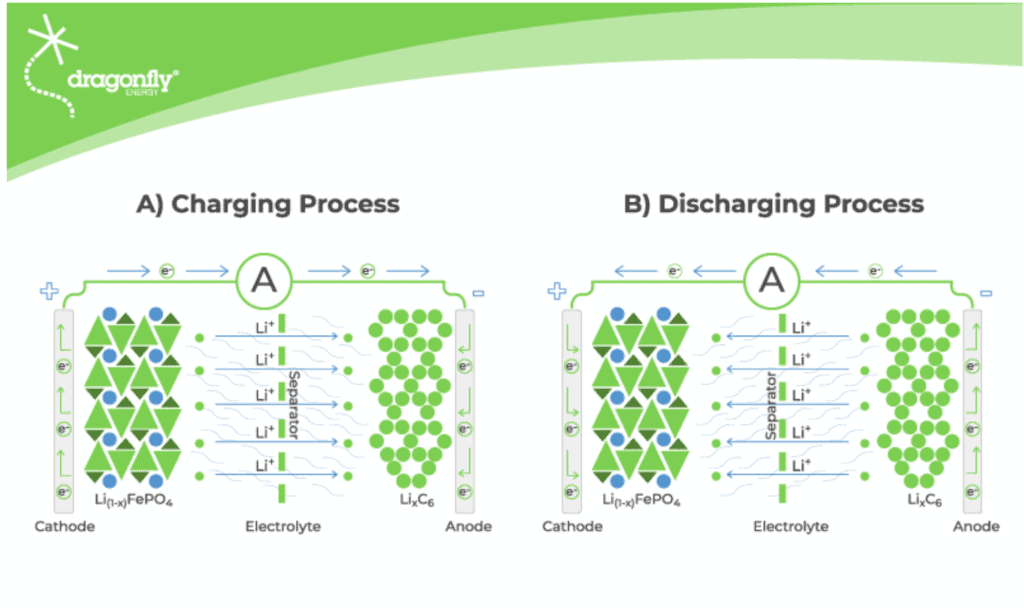
Lithium batteries get their name from lithium-based cell chemistry. In most rechargeable ‘lithium-ion’ batteries, lithium ions move between the anode and cathode during charge and discharge. The specific electrode materials determine the battery type.
For RV, marine, and off-grid deep-cycle use, lithium iron phosphate (LiFePO4) is the most common chemistry for a few reasons. First, its voltage best matches older lead-acid batteries and makes a good direct replacement. Also, it is more thermally stable than many high-energy-density chemistries used in consumer electronics.
Learn More: The Truth About Lead-Acid Vs. Lithium-Ion Batteries
There are many different types of lithium batteries. For example, you’ve probably heard of lithium polymer (LiPo) and maybe lithium cobalt (NCA) battery types. Phones, computers, and other small rechargeable electronics commonly use these batteries.
However, in this article, we discuss lithium battery replacements for traditional lead-acid batteries in RVs, boats, and other larger mobile off-grid applications. The most common lithium battery replacement for lead-acid batteries is the lithium iron phosphate (LiFePO4) battery.
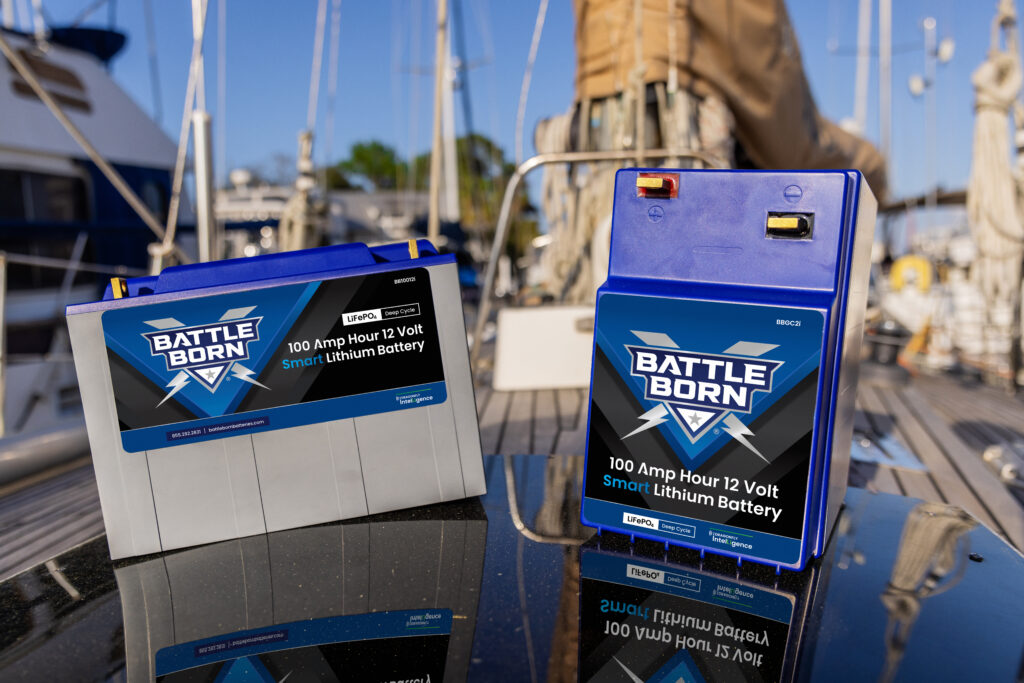
Lithium batteries can be safe, but safety depends on the chemistry and the safeguards built into the battery and the system. Some well-publicized incidents involving high-energy-density lithium-ion chemistries have made headlines and can raise concern. These are typically used in phones, laptops, and some EV packs. They often occurred under abuse conditions such as physical damage or improper charging.
Battery fires like this are caused by something called thermal runaway. Thermal runaway can happen in all types of batteries, not just lithium, and can be caused by many different factors.
However, it is very possible to build extremely stable and safe battery packs. These higher-quality packs can endure more abuse and have a lower risk of fire or explosion.
A safe deep-cycle lithium-ion pack design incorporates safety in a few major layers:
Combine this all with pack-level third-party validation and robust quality control, and you have an incredibly safe battery. Battle Born batteries are designed around this layered approach. And, many models are validated through third-party safety standards, and all get end-of-line functional testing before shipment.
As we mentioned earlier, the most popular option for lithium RV batteries is the lithium iron phosphate (LiFePO4) battery. LiFePO4 batteries have a lower energy density than Li-ion batteries. This results in a more stable battery, which makes them an excellent option for RV applications.
LiFePO4 chemistry does not contain heavy metals like lead and is widely regarded as a more environmentally-friendly option when recycled properly. As with any battery, follow local recycling and disposal requirements.
The bigger safety takeaway is that LiFePO4 is one of the most stable lithium chemistries for deep-cycle storage.
If cell chemistry is the foundation of safety, cell format would be the frame. Deep-cycle packs are commonly built using cylindrical, prismatic, or pouch cells. The cell format influences how the pack handles heat, mechanical damage, and worst-case failure modes.
Cylindrical cells are regarded as the safest lithium battery cell format for several important reasons:
Overall, cylindrical cells are a proven, durable option for mobile deep-cycle applications where the battery has to live through years of movement and temperature swings.
Chemistry and cell format set the baseline, but the electrical design of the system is critical. In a deep-cycle system, most real-world incidents don’t start inside the cell. Instead, they start at the interfaces: high-resistance connections, undersized cabling, improper torque, corrosion, or charging equipment that isn’t configured correctly.
A safe battery pack design uses multiple layers of electrical protection, including:
A properly engineered BMS continuously monitors key conditions and can disconnect the battery when limits are exceeded. Typical protections include:
Inside the battery, safe electrical design includes appropriately sized busbars and interconnects, secure terminations, and routing that minimizes strain and heat concentration. This is the unglamorous engineering that helps a pack stay stable under high load and high ambient temperatures.
In the real world, it is possible for the BMS to fail. A good BMS design should fail “safe” meaning the battery is disconnected, but there are situations where damage can prevent proper BMS operation. In these situations, a last line of defense is an electrical or mechanical means of limiting the potential damage.
Battle Born incorporates a purpose-built thermal failsafe designed to interrupt the current if excessive heat builds up. Similar to a fuse sacrificing itself to protect the rest of a circuit, this is a deliberate, one-time protective event that limits current flow and prevents heat from escalating into the pack. It is a last line of defense, engineered to protect the surrounding system when it matters most.
Deep-cycle batteries live in harsh environments: road shock, washboard vibration, engine heat, salt air, and tight compartments with limited airflow. Mechanical design is a major safety layer because it determines how well a battery holds up to years of physical stress and can handle an incident if one occurs.
Key mechanical safety considerations include:
A battery can have perfect electronics on paper. But, vibration can loosen fasteners, fatigue interconnects, or stress solder joints over time if the internal structure isn’t built for mobile use.
Robust mechanical design includes:
Moisture and conductive contamination can create leakage paths or corrosion that increases resistance and heat. Good enclosure design helps protect internal components from dust, debris, and incidental moisture exposure. We commonly find these conditions in RV compartments and marine settings.
🌟 Our batteries are rated for IP65 ingress protection.
No battery can claim “zero risk,” but smart design can reduce the chance that an external or internal event escalates. We use flame-resistant plastics to reduce ignition potential and limit flame propagation if an external or internal event begins to release the battery’s energy. In other words, the enclosure and materials are chosen not just for looks. They’re chosen to behave predictably under abnormal heat.
Mechanical design also affects how heat moves. Batteries installed in small compartments rely on the enclosure design, internal layout, and mounting environment to avoid trapping heat around sensitive areas. Pairing good mechanical design with sensible installation practices (proper cable sizing, correct torque, and adequate ventilation) delivers the safest outcome.
The safety consideration of LiFePO4 batteries is obviously essential. However, many other benefits help make LiFePO4 batteries the optimal choice for RVers.
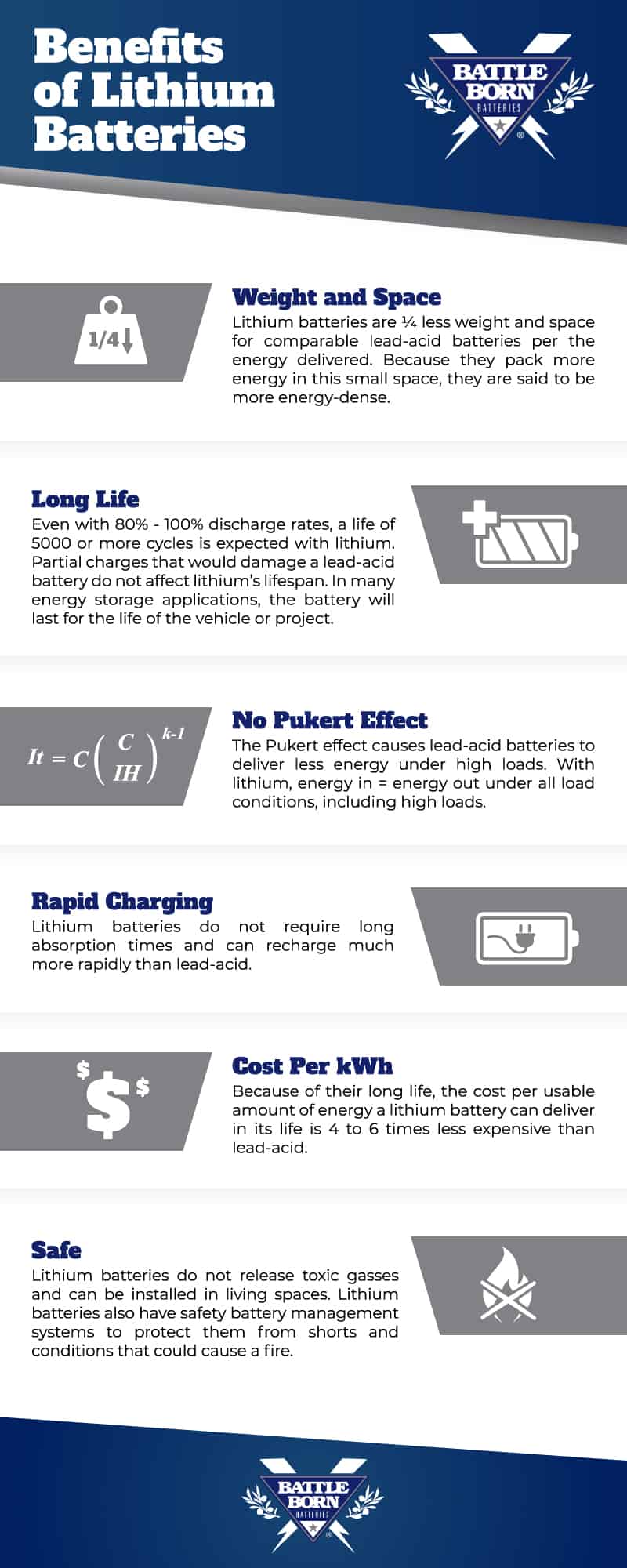
Lithium batteries often cost more up front than older lead-acid designs. But, a quality LiFePO4 battery can deliver far more usable cycles than lead-acid.
Over the life of an RV or off-grid system, that can mean fewer replacements, more consistent performance, and lower cost per usable amp-hour. Cycle life still depends on design margins, cell quality, and using correct charge settings. That is why manufacturer validation and support matter.
Compared to lead-acid and AGM, a properly engineered LiFePO4 battery adds multiple active protections. They help prevent the most common causes of battery damage: overcharge, over-discharge, excessive current draw, and operation outside safe temperature limits.
Battle Born batteries incorporate a built-in battery management system (BMS) designed for deep-cycle RV and marine duty, plus additional fail-safes. Not all lithium batteries on the market include the same protection strategy or testing pedigree. So, it is worth asking what protections are built in and how they are verified.
Another advantage of lithium batteries is that they have a greater usable capacity than lead-acid batteries.
You can only reliably discharge a lead-acid battery to about 50% of its capacity rating before you start damaging the battery. That means that if a lead-acid battery is rated at 100 amp-hours, you only really have about 50 amp-hours of usable energy. This limits its future capacity and lifespan.
By contrast, you can discharge a lithium battery almost completely without causing damage. However, most people don’t deplete them below 20% before recharging. Even if you follow this conservative rule of thumb, a 100 amp-hour lithium battery provides about 80 amp-hours before it needs to be recharged.
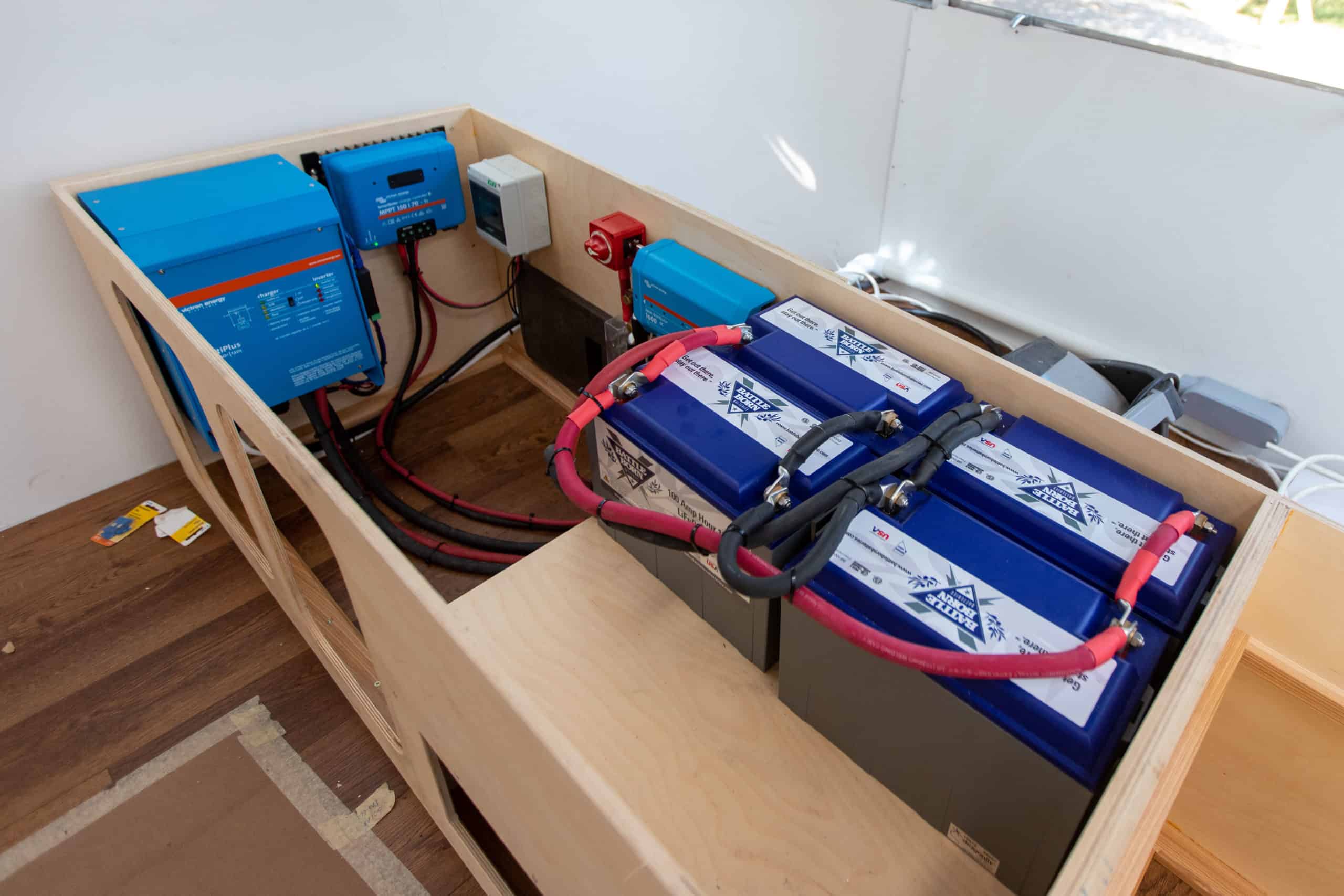
The integrated BMS monitors and helps maintain your lithium battery, eliminating the need to do this yourself.
The BMS makes sure the battery isn’t overcharged, calculates the state of charge of the batteries, monitors and regulates temperature, and monitors the batteries’ health and safety.
There are two ways that lithium batteries can reduce the weight of your battery system.
As we said before, lithium batteries have more usable capacity than lead-acid batteries. This often allows you to need fewer lithium batteries to achieve the same capacity as a lead-acid system. Additionally, a lithium battery will weigh about half as much as a lead-acid battery with the same capacity.
As mentioned, lithium batteries are much more efficient than lead-acid batteries. Even with a similar capacity rating, lithium batteries offer more usable energy. They also discharge at a more stable rate than do lead-acid batteries.
This effectively allows you to operate longer without having to recharge your batteries. This is especially useful when boondocking and allows you to reduce generator usage and maximize your solar power.
While lithium batteries initially cost more than their lead-acid counterparts, the fact that they last 6-10 times longer means that you will ultimately save money in the long run.
So, are lithium batteries safe?
Today, lithium batteries – especially LiFePO4 batteries designed for deep-cycle RV, marine, and off-grid use – are widely considered a safe, high-performance upgrade from lead-acid. They deliver more usable capacity, lower weight, and better efficiency, but the best results come from choosing a battery that is engineered and validated for real-world duty.
That is why Battle Born emphasizes layered safety (chemistry, BMS protections, robust construction, testing, and quality control) and backs it with technical support for proper installation and charging setup. Lithium has become the new gold standard because it can be both capable and dependable – when it is built and applied correctly.
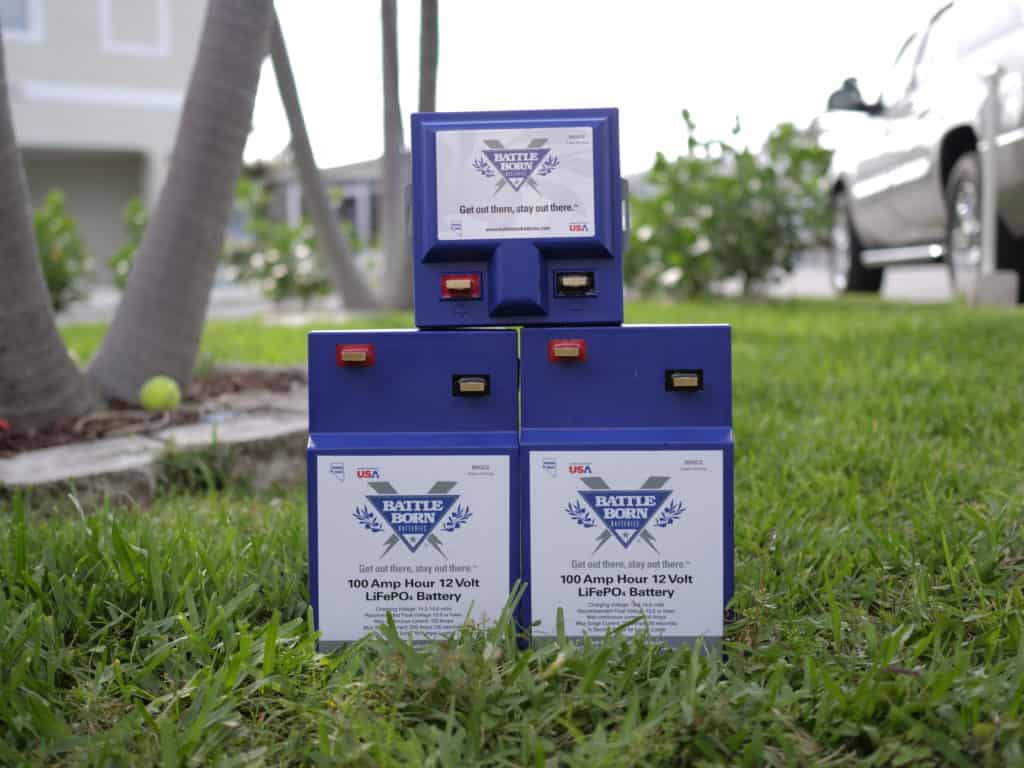
In most deep-cycle energy storage applications, LiFePO4 is widely regarded as one of the more thermally stable lithium chemistries. Stability does not eliminate risk, but it provides a safer foundation that is easier to protect with electronics and design.
Overheating usually comes from system-level conditions: excessive charge current, excessive discharge current, poor ventilation, high ambient temperatures, or high resistance at connections (for example, under-torqued or corroded connections, undersized cables).
Most deep-cycle lithium batteries include a BMS, but not all BMS implementations are equal. Look for clear, documented protections (over-voltage, under-voltage, over-current, short-circuit, temperature limits) and validation against relevant standards.
Start with chemistry (LiFePO4 for deep-cycle), then cell type, then look for specific, documented protection features (BMS limits, temperature sensors, short-circuit response), and evidence of validation (third-party safety standards where applicable, and transparent quality control). Be cautious of vague claims like ‘safe BMS’ without details – reputable manufacturers can explain what protections exist and how they are verified.
Battle Born focuses on layered safety: stable LiFePO4 chemistry, most robust cells design, pack-level design intended for RV/marine vibration and high-current loads, built-in BMS protections, end-of-line functional testing, and application guidance for proper installation and charging settings. In practice, this means the battery and the system are both designed to stay within safe operating limits – and customers have support when troubleshooting.
It means the battery can rapidly interrupt current when a short occurs, reducing the chance of sustained high heat. Protection speed and current capability vary by design.
Yes – deep-cycle lithium batteries are commonly installed inside RV compartments. The key is using a battery designed for the environment, following proper cable sizing and torque specifications, and ensuring charging sources are configured correctly.
Certifications and test standards provide independent validation that a battery was evaluated under defined safety tests. They are not the only factor, but they are a useful way to compare manufacturers and reduce uncertainty.
UN 38.3 is a transportation safety testing requirement for shipping lithium batteries. It confirms the battery can be transported safely through vibration, shock, temperature swings, and related shipping hazards. In mobile applications like RVs and boats, these testing standards matter significantly.
UL/CSA 62133-2 is a lithium battery safety standard (based on IEC 62133-2) that evaluates cell and battery-pack safety under expected use and reasonably foreseeable misuse conditions, including electrical and mechanical testing.
UL 2054 is a safety standard focused on battery packs used as power sources in products, with testing intended to reduce hazards like fire risk under abnormal or misuse conditions (think: electrical faults, mechanical stresses, and other “what if something goes wrong?” scenarios). In plain terms, it’s one way manufacturers can demonstrate that a battery pack has been evaluated to behave safely even when external factors aren’t perfect.
IP65 is an ingress protection rating for the enclosure: dust-tight and protected against low-pressure water jets. However, it is not a submersion rating (that would be IP67/IP68).
Beyond the battery design itself, Battle Born supports safe operation with application guidance for RV, marine, and off-grid systems – including charging settings, installation best practices, and troubleshooting support so the system (not just the battery) runs within safe limits.
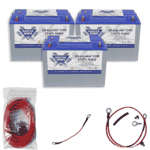
We know that building or upgrading an electrical system can be overwhelming, so we’re here to help. Our Reno, Nevada-based sales and customer service team is standing by at (855) 292-2831 to take your questions!
Also, join us on Facebook, Instagram, and YouTube to learn more about how lithium battery systems can power your lifestyle, see how others have built their systems, and gain the confidence to get out there and stay out there.


4 thoughts on “Are Lithium Batteries Safe?”
My audio player has a lithium ion battery, l keep it beside me in my bed at night to listening to teachings, is this safe to do?
Hi Emily! As the blog states, Lithium battery technology is still relatively new. As this technology has advanced, improvements such as stable internal chemistries have resulted in lithium batteries that are safer than any counterpart. Your audio player will be perfectly safe. Please let us know if you have any additional questions!
I am relocating to TRE, Nevada
(Wellington area)
My interest is outdoor model railroading.
One of my locomotives needs two U1 sized batteries to provide 24 volts for the motors — Are there lithium batteries available in that size?
Hi John, I apologize for the delay in getting back to you. In regards to our batteries, they cannot be used in starting applications at this time.