

MENUMENU
TALK TO AN EXPERT
Special Hours: 7AM – 6PM PST


We all use electricity every day (and night!) for many necessities, luxuries, and comfort items. Still, most of us are relatively unfamiliar with volts, amps, and watts, the basic electricity units.
Volts are only one part of the equation, but understanding their place in the equation will take us well down the path of understanding the power we use every day. Let’s dig in!

A volt is a potential difference across a conductor when a current of one ampere (Amp) dissipates one watt of power. This probably doesn’t mean much to those of us without an electrical engineering degree. So let’s break it down.
Voltage is the pressure from a power source that pushes charged electrons (current) through a conducting loop (between two points), enabling them to power something such as a light. It can be thought of like pressure in a water line.
So essentially, voltage is electrical pressure and is measured in volts. So a volt (V) is simply a unit of measurement of voltage.
Voltage is created from the buildup of electrons in one area more than another. This happens naturally in clouds before a lightning bolt strikes, and even in your body before discharging as a static electric spark.
What is happening is that electrical pressure builds up in the cloud or your body until it gets high enough to leak out to the lower voltage point.

Let’s look at what this means in terms of the electrical power we use every day. We’ll begin by considering the illumination of a lamp in our home.
A lightbulb will have a voltage rating on it. In North America, lightbulbs used in your home will be rated for 120 volts. The lightbulb does not create this voltage but is designed to be connected to a circuit that is at that voltatge.
The number of volts listed refers to the force of electricity going into the bulb from a battery or electrical outlet.
Some standard voltages are 120V, 130V, or very low-voltage bulbs like the 12V DC (direct current) LED lights many of us use in our RVs or boats.
Unlike the high voltage in our lighting example above (120V), a fully charged battery carries 12.6 to 12.8 volts, a very low voltage measurement by comparison.
The simple answer is NO. Voltage is just pressure and poses no danger. In fact, when you get a spark off your finger from static electricity, the voltage of that spark is usually around 25,000 volts!
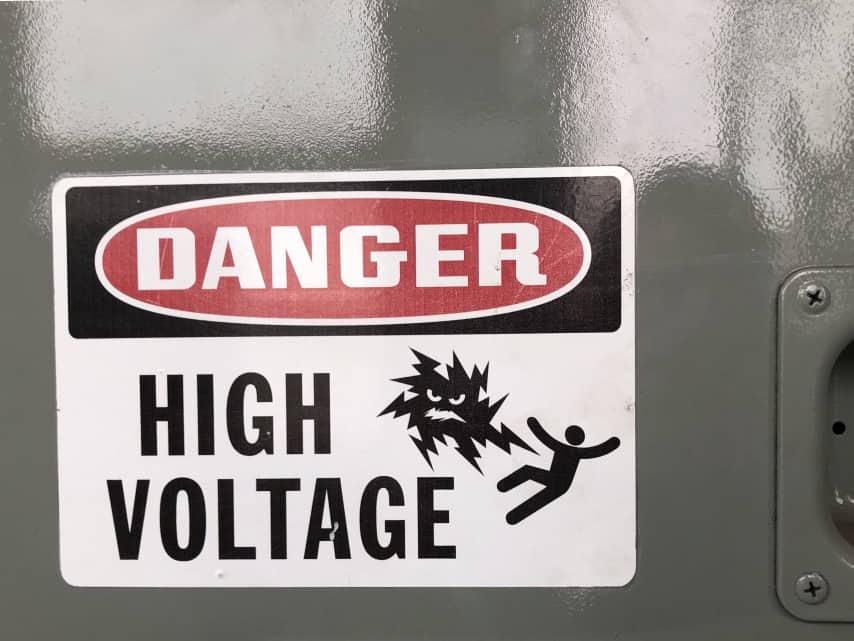
Since voltage is only a measurement of pressure, there needs to be enough electrons to flow to be dangerous. With enough pressure and flow (amps), an electrical circuit can become dangerous. Any circuit below 50 volts will not have enough electrical pressure to push enough current through your body to cause harm.
When we measure voltage, we measure the potential electrical energy between two points. As we established earlier, voltage is measured in volts.
We would use a multimeter or a voltmeter to measure a household circuit’s voltage or a battery. A voltmeter can only measure voltage, but a multimeter can take many other measurements.
Let’s look at how we would measure voltage using a digital multimeter, as it is considered the easiest instrument to use for measuring voltage (and it also measures amps and ohms).
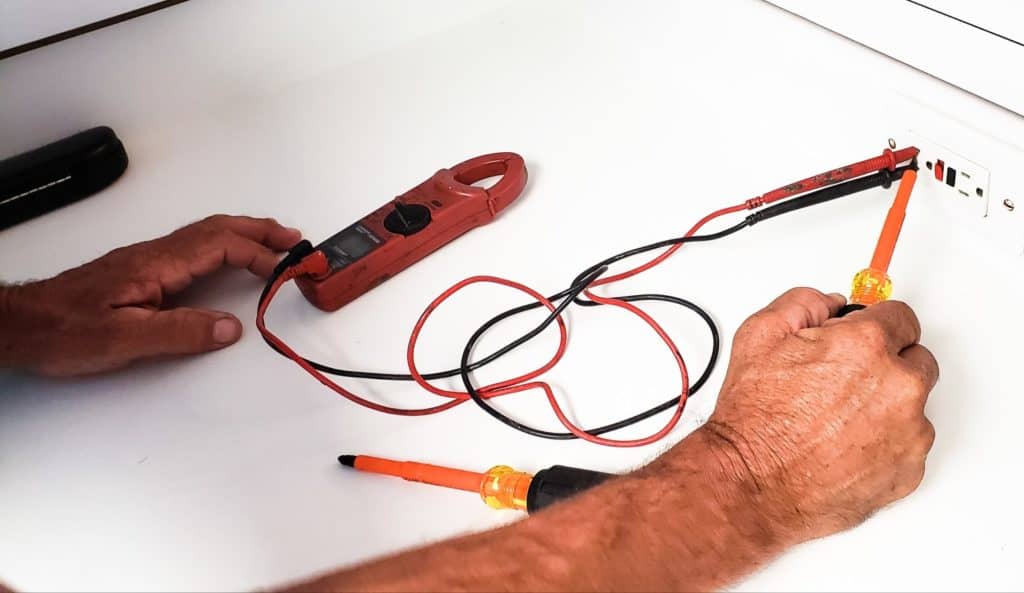
A digital multimeter has a red lead (wire) and a black lead (wire).
First, plug the red lead into the multimeter’s input marked “V,” and plug the black lead into the multimeter’s input marked “COM”. (This is how you make sure you measure voltage and not amps or ohms.)
Note: Be sure not to reverse the red and black leads (wires), or you could damage or destroy the multimeter.
Next, depending on what you’re measuring, select the AC (alternating current) mode or the DC (direct current) mode using the dial at the center of the multimeter. (Note: DC indicates a straight line with three dots under it, and a wave symbol indicates AC. Also, some multimeters may use “DCV” for DC voltage and “ACV” for AC voltage.)
DC is used to measure voltage in batteries or small electronic devices, and AC measures the voltage in household outlets and larger household electronics or appliances.
Many digital multimeters automatically choose the range to be measured. If you need a different range, check the normal voltage of the device you’re measuring in the owner’s manual or printed directly on the device, appliance, or battery. Set the range to one level above the voltage you’re measuring. For example, if you measure a 12-volt battery, you’ll want to turn the dial to 20V (which is one level above 12).
To test the multimeter on a battery, touch the metal probe from the red lead on the positive terminal and the probe from the black lead on the negative terminal, holding only the plastic covers of the probe in your hands as you do so. If necessary, choose the range of the battery’s voltage using the center dial. Check the voltage reading on the display. You just measured voltage (in volts)!
Note: If your reading is a “1” or a negative number, check the range and make sure you have the leads in the correct inputs.
Electricity transmitted at high voltage can travel long distances efficiently. This is why power companies use high-voltage lines to deliver electricity from generation plants to homes and businesses.

The most significant advantage of high voltage transmission is greater efficiency. When transmitting electricity over long distances, energy gets lost along the way. High voltage transmission minimizes energy loss from one location to the next.
The most significant disadvantage of high voltage transmission is the chance of an accident. High voltage can cause harm or injury due to higher power production flowing through the lines. While high voltage alone isn’t dangerous, the electrical current flowing through the lines is hazardous. A good example of this would be a downed power line. It is dangerous even to approach an energized power line because the electricity from the high voltage can arc through the air causing severe injury or even death.
Low voltage is considered anything under 50V (volts) of electricity. Standard low voltages are 12V, 24V, and 48V. Low-voltage wiring doesn’t carry the same current as power outlets. For example, it’s used for doorbells, garage door openers, thermostats, alarm system sensors, audio-visual systems, and our RV LED lighting!
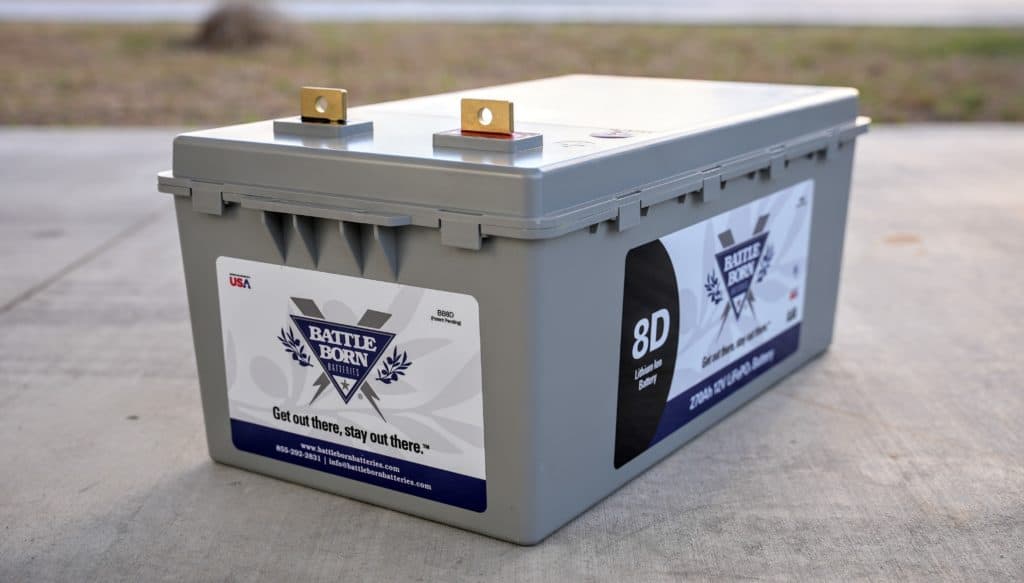
A significant advantage of lower voltage systems is that batteries power them. Additional benefits of low-voltage wiring are that it’s easy to install and doesn’t require a professional electrician. It’s much safer than high-voltage wiring, and the wiring needs less insulation. Finally, low voltage typically means less energy consumption.
A disadvantage of low-voltage wiring is the potential for energy loss across the wires.
Battery voltage is the amount of electrical potential a battery holds, measured in volts. Batteries vary from a few hundredths of a volt to many hundreds of volts, depending on battery size and construction.
To simplify, think of a battery as a pipe. The voltage of that battery is the water pressure in the pipe. It is this pressure that makes current flow, bringing power to your device. Let’s look at the voltages of some standard batteries.
The voltage of a household alkaline battery is 1.5 Volts. When we need higher voltages to power a device, we can stack several 1.5-Volt batteries in series. (Think of putting four batteries into a child’s toy car to power it, for example.)
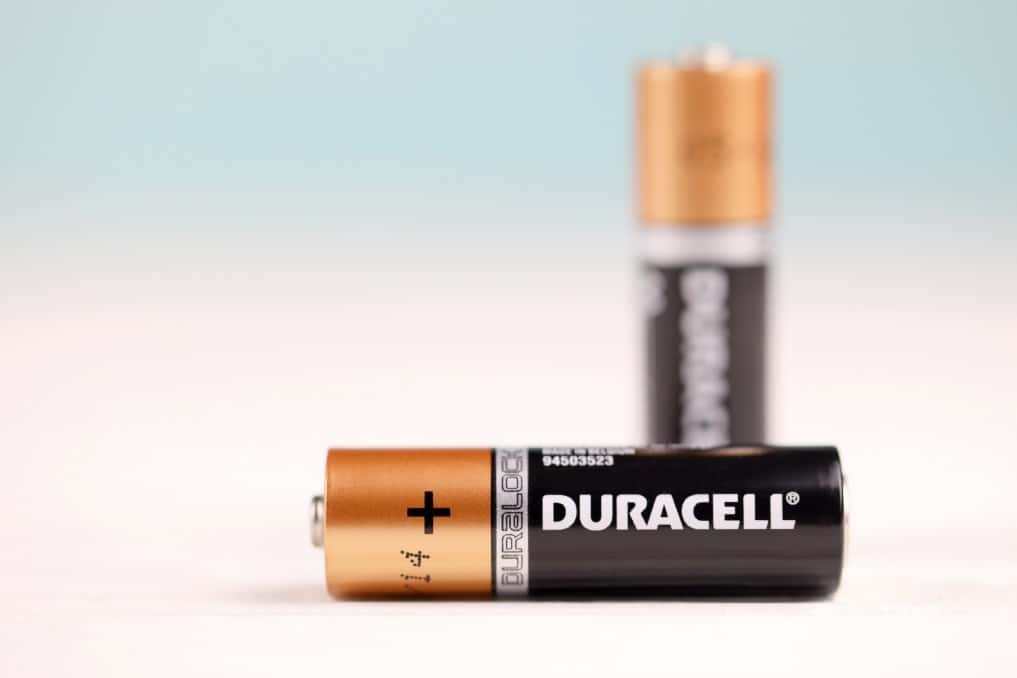
The voltage of an ordinary car battery is 12 volts. Again, we can stack 12V batteries in series to achieve higher voltages.
The battery of an electric car can run between 300-700 Volts. These are high-voltage battery packs.
Batteries of backup power systems commonly run from 48V to 110V, but power grid systems can run into thousands of Volts.

Devices and equipment are designed to work correctly under a specific rated voltage. Equipment connected to the wrong voltage can cause problems, from the inability to function to serious consequences such as a fire. Let’s look at a couple of examples:
If an appliance rated for 110 volts (110V) is connected to a 220-Volt (220V) power supply, when it’s turned on, it will be in an overvoltage situation. This will melt the fuse and damage the appliance.
If a 220-Volt (220V) appliance is connected to a 110-Volt (110V) power supply, the power will be a fraction of what it should be when the device is on. For example, a lamp might be dim, a motor will not turn or will turn very slowly, or a heating element will barely heat. Most likely, the appliances will not work at all.
As we’ve seen, volts matter! However, they matter most in conjunction with their compadres, amps, and watts. Volts are only part of the equation. Amps and Watts, when joined with Volts, tell the rest of the story.
These “Three Musketeers”, working together, bring us the joys, luxuries, and necessities associated with electricity.
A: A volt is a way to measure electrical pressure. It tells you how hard electricity is being pushed through a circuit.
An easy way to think about it is like water in a hose:
Volts = water pressure
Amps = how much water is flowing
Watts = how much work the water can do
In electrical systems, volts work together with amps and watts to determine how much power a device can use. If you want a deeper breakdown of how these three work together, see our guide on Amps, Volts, and Watts.
A: Volts, amps, and watts each describe a different part of electricity:
They are connected by a simple equation:
Watts = Volts × Amps
This relationship is especially important in RV, marine, and off-grid battery systems where knowing total power demand helps you size batteries, inverters, and solar correctly.
A: In most cases, 12-volt systems are considered low voltage and generally safe when installed correctly. That’s why 12V systems are widely used in RVs, boats, and off-grid setups for lighting, appliances, and battery banks.
However, while the voltage itself is low, high current (amps) can still create heat, sparks, or fire risks if wiring is undersized or connections are loose. This is why proper fusing, cable sizing, and attention to voltage drop are critical in low-voltage systems.
A: Most RV electrical systems are built around 12V or 24V because these voltages strike a balance between safety, efficiency, and compatibility with common RV appliances.
Some advanced off-grid and inverter-heavy systems even use 48V, which further reduces current and cable size requirements.
A: A fully charged 12-volt battery typically reads between 12.6 and 12.8 volts at rest, depending on battery chemistry and temperature.
Lithium batteries tend to hold their voltage more consistently under load compared to lead-acid batteries, which can experience noticeable voltage sag as they discharge.
A: Yes. Batteries can be connected in series to increase voltage or in parallel to increase capacity (amp-hours).
Understanding the difference is critical when designing RV, marine, or off-grid battery systems.
A: Volts are a key part of converting between watt-hours (Wh) and amp-hours (Ah), which are commonly used to describe battery capacity.
The basic relationship is:
Watt-hours = Volts × Amp-hours
This calculation helps you compare batteries, estimate runtime, and size solar or inverter systems more accurately.

We know that building or upgrading an electrical system can be overwhelming, so we’re here to help. Our Reno, Nevada-based sales and customer service team is standing by at (855) 292-2831 to take your questions!
Also, join us on Facebook, Instagram, and YouTube to learn more about how lithium battery systems can power your lifestyle, see how others have built their systems, and gain the confidence to get out there and stay out there.