
MENUMENU
TALK TO AN EXPERT
Special Hours: 7AM – 6PM PST


If you pay attention to energy-storage trends, it’s hard to miss the buzz around sodium-ion batteries. Between new product announcements and global supply-chain shifts, many are asking: Is sodium-ion going to replace lithium-based batteries?
At Battle Born Batteries, we take innovation seriously. Our in-house R&D department continuously evaluates emerging technologies and explores ways to improve both existing lithium iron phosphate systems and next-generation chemistries. We are genuinely excited about the potential of sodium-ion for certain applications. However, our testing and real-world analysis show that the technology is still far from ready to replace LiFePO₄ in RVs, off-grid homes, boats, vans, or any mobile deep-cycle system.
The characteristics of sodium-ion chemistry simply do not align with the performance demands of these environments, at least not yet.

A sodium-ion battery operates in a very similar way to a lithium-ion battery, storing and releasing energy by moving charged ions between the positive and negative electrodes. The difference is simply that they use sodium ions (Na⁺) instead, which are larger than lithium ions, to move through the battery’s structure.
That difference in ion size and chemical properties influences everything from energy density and weight to efficiency and voltage behavior.
In practice, most commercial sodium-ion cells use a hard-carbon anode (not graphite) and sodium-based cathodes. To store a given amount of energy, sodium-ion cells must be larger and heavier than equivalent lithium-based cells.
They also rely on organic electrolytes, similar to lithium-ion batteries. This means sodium-ion is not inherently non-flammable and does not remove the need for a proper battery management system (BMS).
In other words, sodium-ion does not guarantee a big safety advantage over lithium-iron-phosphate (LiFePO₄)-based packs.
Broadly speaking, current sodium-ion cells offer:
All of that is interesting. But the details matter a lot when you drop these batteries into a 12V or a 48V off-grid solar setup.
Cycle life gets the headlines, but for RV, marine, and off-grid systems, battery voltage behavior is often the make-or-break factor.
When we look at how the batteries maintain voltage under load, sodium-ion chemistry performs poorly compared with LiFePO₄:
This behavior is comparable to older lead-acid batteries, which would sag deeply in voltage when running demanding equipment. Just as with lead-acid technology, this sag means you often cannot use the full rated capacity of the battery because your inverter will reach its low-voltage cutoff well before the battery is technically “empty.”
LiFePO₄ is the opposite. It maintains a nearly flat voltage curve for most of the discharge cycle, even under substantial load. This stability means LifePo4 can use almost the entire rated capacity without prematurely tripping low voltage protection.
In practical terms, this translates to more usable watt-hours and a system that behaves consistently regardless of load.
💡 Yes, you can design special inverters, DC-DC conversion stages, or software tricks to get around this. But that adds:
- Cost
- Complexity
- Another layer of “early adopter risk”
For most boaters, RVers, and off-grid homeowners, that’s not a good trade.
| Aspect | LiFePO₄ (LFP) | Sodium-Ion (Na-ion) |
|---|---|---|
| Voltage Curve Shape | Flat discharge curve; voltage remains stable through most of the cycle | Sloping linear curve; voltage steadily drops throughout the discharge cycle |
| Voltage Stability Under Load | Maintains high, consistent voltage even under moderate or heavy loads | More voltage sag under load due to higher internal resistance and changing reaction potential |
| Operational Voltage Window | Narrow, predictable voltage window (approx. 13.4 V full → ~12.8 V mid-range for a 12 V pack) | Much wider voltage window; full pack voltage may be >14 V and can fall below 10 V while still holding significant remaining state of charge |
| Voltage Drop at Low State of Charge | Drops sharply only near the bottom (2–5% SoC), allowing predictable depth of discharge | Voltage declines steadily, causing premature low-voltage conditions even at 40–60% state of charge |
| Impact on Usable Capacity | Nearly the entire rated capacity is usable before hitting inverter low-voltage cutoff | Actual usable capacity can be much lower than rated capacity because voltage reaches inverter cutoff early |
| System Compatibility | Ideal match for 12V / 24V / 48V inverter-based systems; stable voltage designed for modern power electronics | Often incompatible with standard inverters unless derated or specially configured due to large voltage swings |
| Practical Outcome in RV/Off-Grid Use | Predictable performance, consistent power delivery, and high utilization of battery Ah rating | Reduced usable watt-hours, inconsistent inverter operation, and significant performance loss under load |
We’re battery nerds at heart, and our company’s CEO is a battery chemist. So, we enjoy deep-diving into the technicals.
Voltage in any battery comes from the difference in electrochemical potential between the anode and the cathode. This potential difference is determined by the specific chemical reactions occurring at each electrode during charge and discharge. From an even more fundamental physics perspective, the potential is calculated from the Gibbs free energy change (ΔG) of the reaction.
Below are the actual redox reactions for LiFePO₄ (LFP) and a typical sodium-ion chemistry, and how those reactions translate into different voltages on the cell level. These underlying chemical behaviors explain the voltage instability and load sag observed in independent testing.
During discharge, lithium ions leave the anode (graphite) and insert into the LiFePO₄ cathode lattice. This reaction is:
FePO₄ + Li⁺ + e⁻ ⇌ LiFePO₄
This is a two-phase reaction, meaning LiFePO₄ transforms cleanly between two distinct crystalline phases (FePO₄ and LiFePO₄) without a lot of structural distortion.
That two-phase mechanism is why LiFePO₄ has such a flat discharge curve — the reaction potential stays almost constant throughout most of the charge/discharge cycle.
Lithium ions intercalate into graphite layers:
C₆ ⇌ LiC₆ + e⁻ + Li⁺
To compute the voltage, we subtract the anode potential from the cathode potential.
Cell voltage ≈ 3.45 V − 0.10 V = ~3.35 V nominal
Fully charged limit is typically 3.65 V.
This is why a 4-cell LiFePO₄ pack (4 × 3.2–3.3 V) produces a nominal 12.8–13.2 volts and holds that voltage steadily across most of its usable capacity.
There are multiple sodium-ion chemistries, but one of the most commercially relevant is Prussian White / Sodium Iron Hexacyanoferrate (NaₓFe[Fe(CN)₆]), used in many next-generation sodium-ion cells.
Na₁₋ₓFe[Fe(CN)₆] + xNa⁺ + xe⁻ ⇌ NaFe[Fe(CN)₆]
This reaction inserts sodium ions into the Prussian white framework.
Unlike LiFePO₄, this is not a clean two-phase reaction. Structural changes occur gradually, so the reaction potential changes noticeably as sodium content changes.
This is why sodium-ion cells show a sloped voltage curve instead of a flat one.
C + xNa⁺ + xe⁻ ⇌ NaₓC
Because sodium ions are much larger than lithium, they cannot intercalate into graphite — they instead insert into the pores of “hard carbon,” which has a much higher electrochemical potential than graphite.
Typical hard carbon potential: ~0.1–0.2 V vs. Na⁺/Na
Cell voltage ≈ 3.3 V − 0.3 V ≈ 3.0 V nominal
Full charge may reach 3.8–4.0 V per cell, depending on chemistry.
This lower nominal voltage is caused by the intrinsic electrochemical potential of sodium vs. lithium. Sodium sits higher on the periodic table, is less electronegative, and therefore produces a lower redox potential.
This is why a sodium-ion “12-volt” pack may require 4 or 8 cells in series and still show a much larger voltage swing — for example:
That wide voltage range is what causes inverter cutouts and poor usable capacity in 12/24/48V systems built around lithium chemistry.
In addition to the major voltage issue discussed above, there are several main differences between sodium-ion batteries and lithium-ion batteries worth discussing:
Sodium-ion batteries currently exhibit lower overall efficiency compared to LiFePO₄. More energy is lost as heat during both charging and discharging due to higher internal resistance, which means more solar input or generator runtime is needed to achieve the same usable output.
In off-grid environments where every watt of solar harvest matters, this inefficiency becomes a meaningful drawback.
Sodium-ion does have an interesting advantage: in cold temperatures, the chemistry can begin charging at lower temperatures than LiFePO₄, thanks in part to its hard-carbon anode design.
But because sodium-ion performance still suffers significantly at low temperatures during discharge, the cold-weather advantage is not nearly as impactful as marketing materials sometimes suggest.
While this characteristic is potentially valuable in very cold climates, LiFePO₄ batteries with built-in heating systems already solve this issue in a practical, well-proven way.

Cycle life is another area where sodium-ion has not yet matched the real-world endurance of LiFePO₄.
Although some manufacturers promote extremely high cycle-life numbers for optimized laboratory conditions, our own testing and broader industry data show that sodium-ion batteries tend to experience meaningful degradation far earlier than quality LiFePO₄ cells.
The reason for this partially has to do with the larger ionic size: Lithium ionic radius: ~0.76 angstroms (Å) , Sodium ionic radius: ~1.02 Å (roughly 35% larger). Because the sodium-ion cathode is continuously expanding and contracting, the structure experiences more stress.
In mobile or off-grid use, where batteries experience variable depth-of-discharge cycles, fluctuating temperatures, and mixed charging sources, sodium-ion cells often drop in capacity sooner than expected.
LiFePO₄, by contrast, has an extensive track record of delivering thousands of cycles with predictable aging curves in exactly these real-world conditions. Our customers regularly achieve 3,000 to 5,000+ cycles with well-designed LiFePO₄ and see a decade or more of service life.
The Takeaway:
Sodium-ion batteries currently carry a significant penalty in size and weight per kilowatt-hour. Because the chemistry stores less energy per pound than LiFePO₄, the resulting battery packs are bulkier and heavier.
In mobile applications—where payload, balance, and installation space matter—this is a major drawback. The additional size also means more difficulty integrating sodium-ion batteries into existing compartments, battery bays, or marine lockers.
Sodium-ion batteries are in the very early stages in consumer markets. In addition, they are not yet integrated into the broader 12-volt, 24-volt, and 48-volt ecosystem the way LiFePO₄ is.
Modern inverters, solar charge controllers, alternator charging systems, and DC-DC chargers are all optimized for LiFePO₄ profiles.
Sodium-ion, with its unusual voltage behavior and efficiency characteristics, would require redesigned system components to work reliably.
That ecosystem maturity matters enormously for installers, technicians, and consumers who rely on well-understood equipment standards.
Safety is a very important factor to compare between battery types. Let’s take a look:
LiFePO4 is already one of the most stable and safest lithium chemistries on the market.
Sodium-ion is safer than many high-nickel lithium chemistries, but does not offer a meaningful safety advantage over LiFePO4 for low-voltage systems.
At this time, sodium-ion just does not provide a clear, significant safety advantage over LiFePO4.
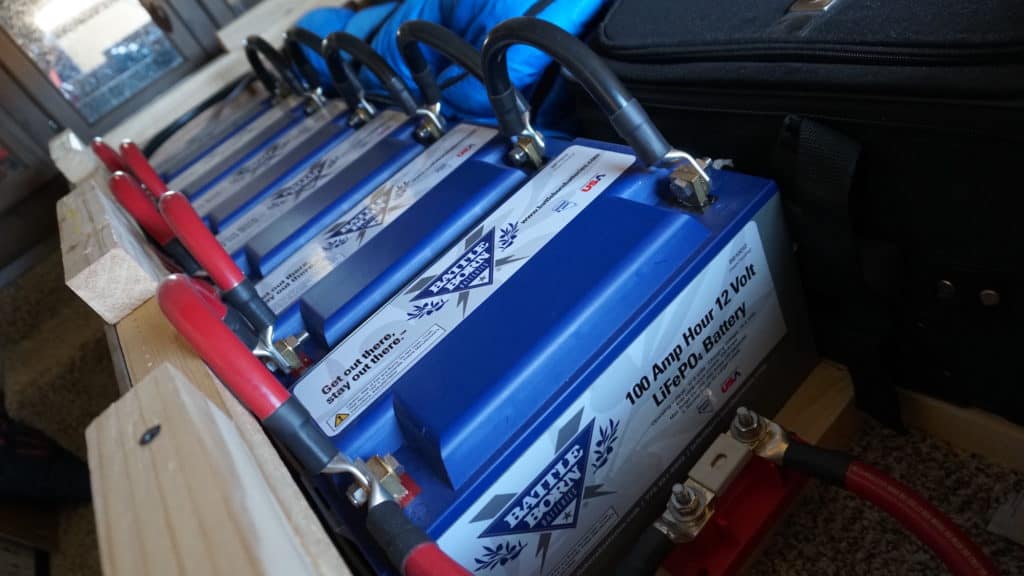
Sodium-ion is often promoted as a cheaper alternative to lithium batteries because sodium is abundant and inexpensive as a raw material.
In short, low sodium-ion prices are not validated yet. The marketing hype suggesting extremely low future sodium-ion prices is not reflected in any real commercial product today.
It is important to acknowledge that sodium-ion is not without merit. When used in large, stationary applications, such as utility-scale energy storage, where weight and size are irrelevant, and custom controllers can be built, the chemistry offers real long-term cost potential once global manufacturing ramps up.
Sodium-ion may also fit certain low-cost electric vehicle platforms in regions where compactness is less important than minimizing material costs. These are appropriate and promising use cases. But they are very different from the demands faced by an RV or a remote cabin reliant on an inverter-based electrical system.
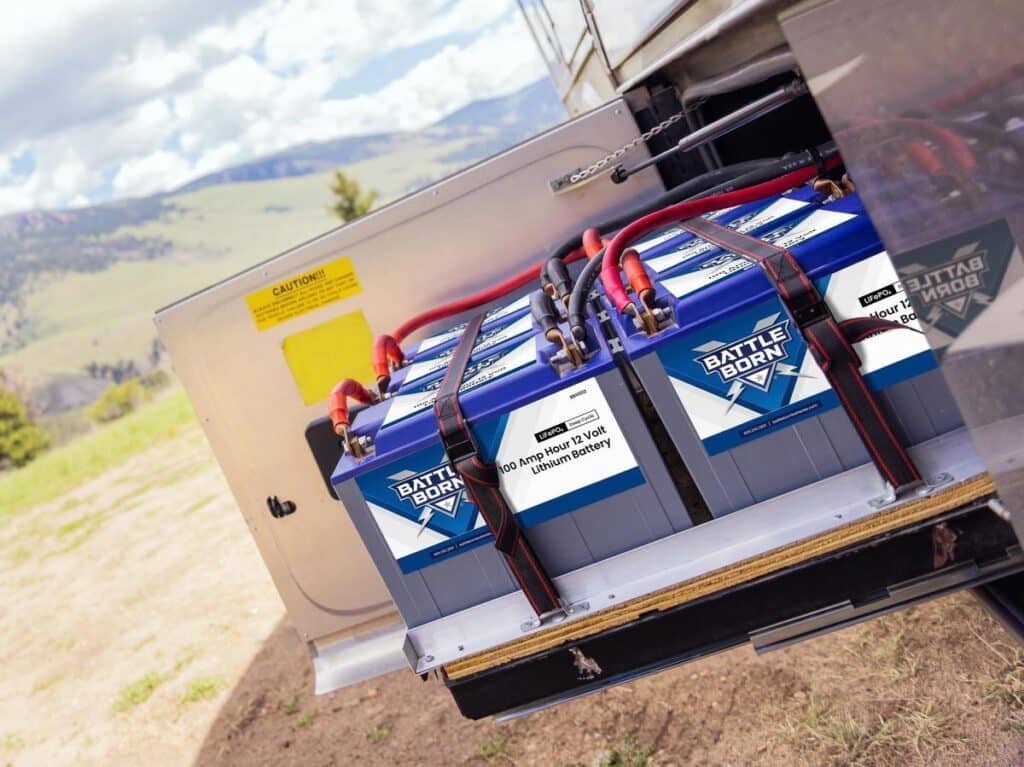
A big part of the sodium-ion story is built around raw materials. Sodium is often presented as the “table salt” alternative to lithium, with claims that it will solve supply constraints and eliminate the need for “scarce” ingredients.
At a basic geologic level, that narrative has some truth to it. Sodium is roughly a thousand times more abundant than lithium in the Earth’s crust, and tens of thousands of times more plentiful in the oceans. In contrast, lithium is present at only a few parts per million in crustal rock and must be mined from brines or hard-rock deposits. On paper, that makes sodium an appealing building block for very large, long-term energy-storage deployments.
However, there is an important distinction between elemental abundance and battery-grade material. Sodium-ion batteries do not run on table salt from the grocery store. They rely on industrial sodium compounds such as soda ash (sodium carbonate) and specialized electrolyte salts that must be refined to tight purity specifications.
These compounds are indeed cheaper at the commodity level than lithium carbonate—hundreds of dollars per ton for sodium carbonate vs. thousands per ton for lithium carbonate in recent years—but they still require a full mining, refining, and manufacturing chain. And that chain is currently far less mature than lithium’s. In other words, sodium’s natural abundance does not automatically translate to instant, cheap, globally available sodium-ion battery packs.
It also helps to zoom in on how much lithium is actually used in a modern lithium iron phosphate battery. A 100 Ah, 12 V-class LiFePO₄ battery (about 1.2–1.3 kWh), contains only a few hundred grams of lithium in total.
In practical terms, the lithium fraction of the entire battery mass is modest. Most of the weight is made up of aluminum and copper current collectors, electrolyte, separator, casing, and, in the case of LiFePO₄, abundant elements like iron and phosphorus.
This is where LiFePO₄’s materials story becomes very compelling. Unlike many nickel-manganese-cobalt (NMC) or nickel-cobalt-aluminum (NCA) chemistries used in EV batteries, LiFePO₄ cathodes contain no cobalt and no nickel at all. They are based on lithium, iron, and phosphate: all relatively abundant, widely distributed, and well-understood materials. Cobalt in particular is associated with significant cost volatility and complex social and environmental concerns, which LiFePO₄ completely avoids. From a resource and ethics standpoint, that means LiFePO₄ already solves many of the “rare metal” issues that sodium-ion marketing often implies it is uniquely positioned to address.
At Battle Born (and our parent company Dragonfly), our R&D team follows this materials debate closely because it affects both long-term sustainability and customer confidence. From our perspective, LiFePO₄ already represents a very responsible balance: it leverages a manageable amount of lithium, eliminates cobalt and other high-risk metals from the cathode, and relies heavily on abundant elements like iron and phosphorus.
Sodium-ion may eventually help diversify the global battery landscape, especially at the grid scale. But it does not magically make LiFePO₄ “obsolete” on material grounds, nor does it change the fact that LiFePO₄ uses far fewer problematic materials than many other lithium chemistries in use today.
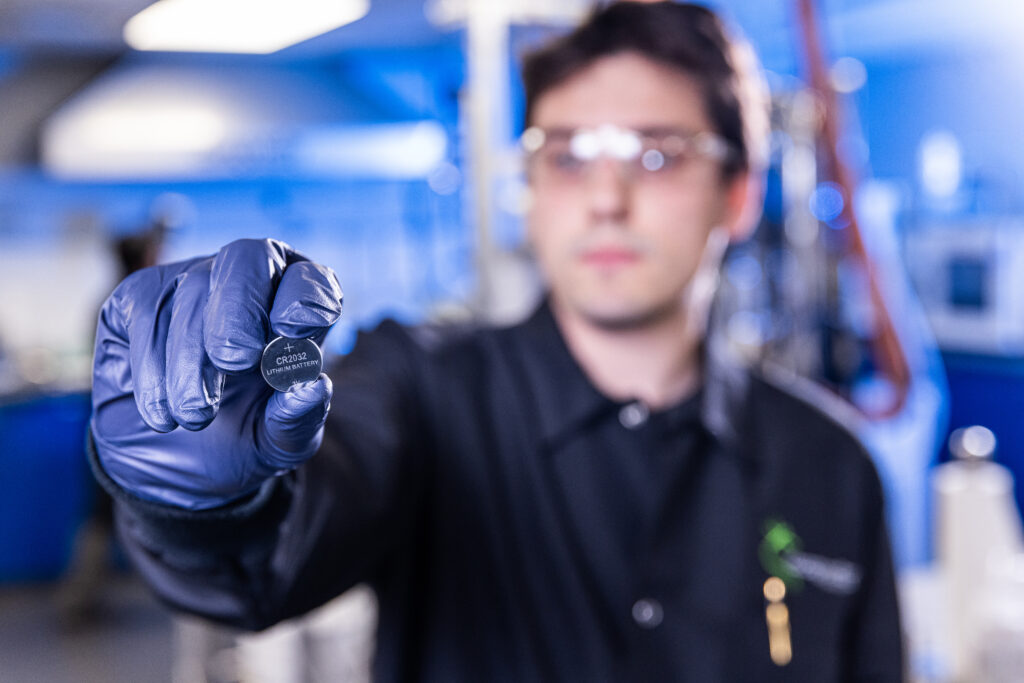
After evaluating sodium-ion extensively, our position is clear: LiFePO₄ remains the most reliable, efficient, and proven deep-cycle chemistry for mobile and off-grid applications.
It offers predictable voltage behavior, exceptional cycle life, low degradation rates, high round-trip efficiency, and a well-established ecosystem of compatible components. For anyone building or upgrading an RV, van, boat, or off-grid property, LiFePO₄ continues to deliver the best long-term performance and value.
At Battle Born Batteries, our R&D team will continue to monitor, test, and evaluate sodium-ion innovations. If the technology reaches a point where it offers a true system-level advantage for RVers and off-grid users, we will be ready to adapt.
But today, sodium-ion simply cannot match the performance, reliability, or real-world usability of LiFePO₄ in the environments our customers depend on.
If you are designing a system or considering an upgrade, we are here to help you size a LiFePO₄ battery bank, choose the right components, and ensure your system delivers dependable power for years to come.
We know that building or upgrading an electrical system can be overwhelming, so we’re here to help. Our Reno, Nevada-based sales and customer service team is standing by at (855) 292-2831 to take your questions!
Also, join us on Facebook, Instagram, and YouTube to learn more about how lithium battery systems can power your lifestyle, see how others have built their systems, and gain the confidence to get out there and stay out there.